


Search behavior is changing quickly. Increasingly, users are getting their answers from AI-generated responses without ever clicking on a single link. If your site isn’t in a format that AI can read, you are invisible to that whole audience. That’s a big traffic and authority problem.
So, what is AI SEO? AI SEO is the process of optimizing your website to be selected and referenced by AI search engines (Google AI Overviews, Perplexity, Chatbot, etc). The goal is to be the source that these systems rely on and cite.
In this blog, we’ll discuss how AI SEO functions and how to get your website cited by AI.
Did You Know?
Organic traffic from traditional search has been sharply declining over the past few years. AI-referred sessions are the new norm, recording a growth of 527% year-over-year in the first half of 2025.
Google AI Overviews VS ChatGPT: How They Cite A Website?
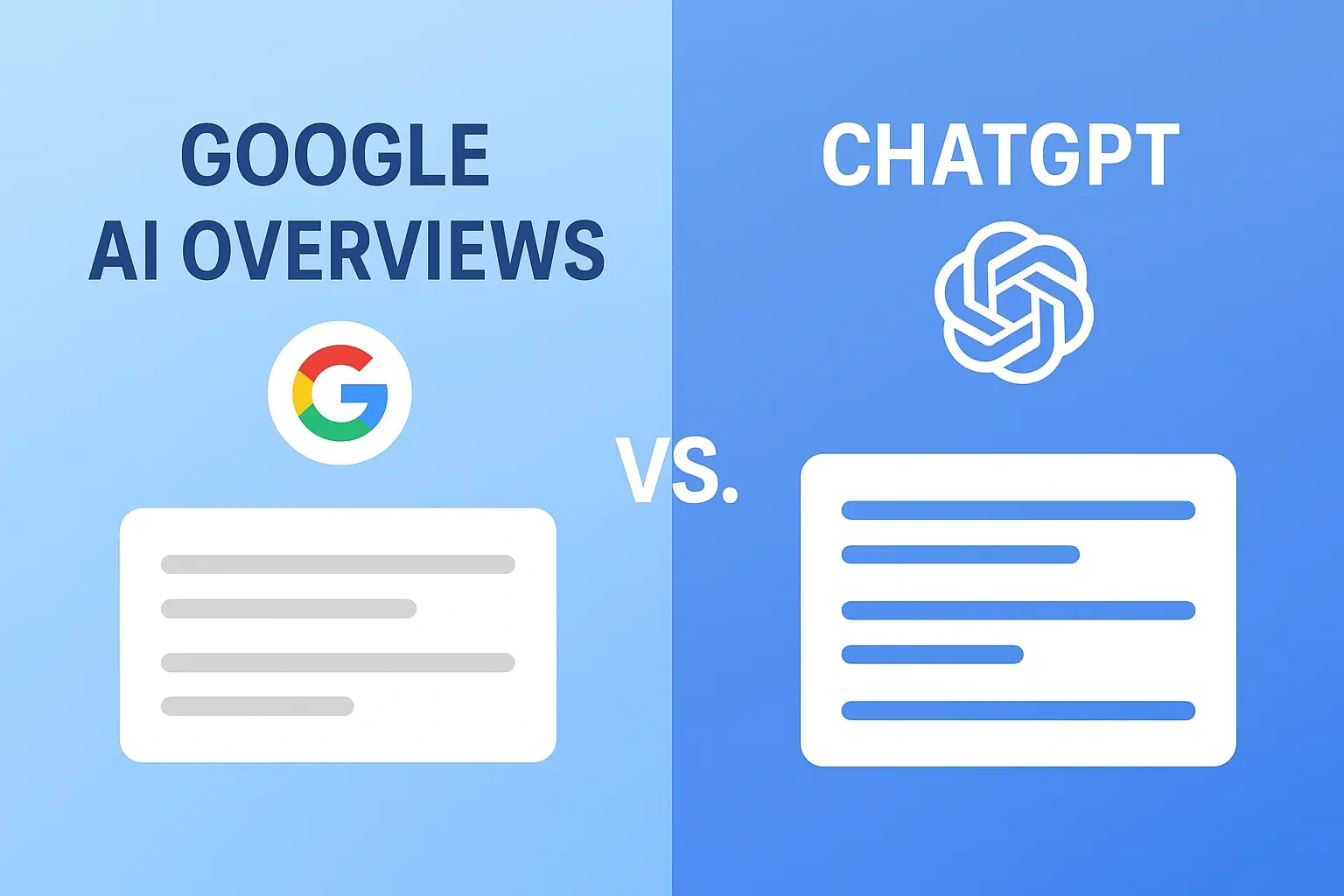
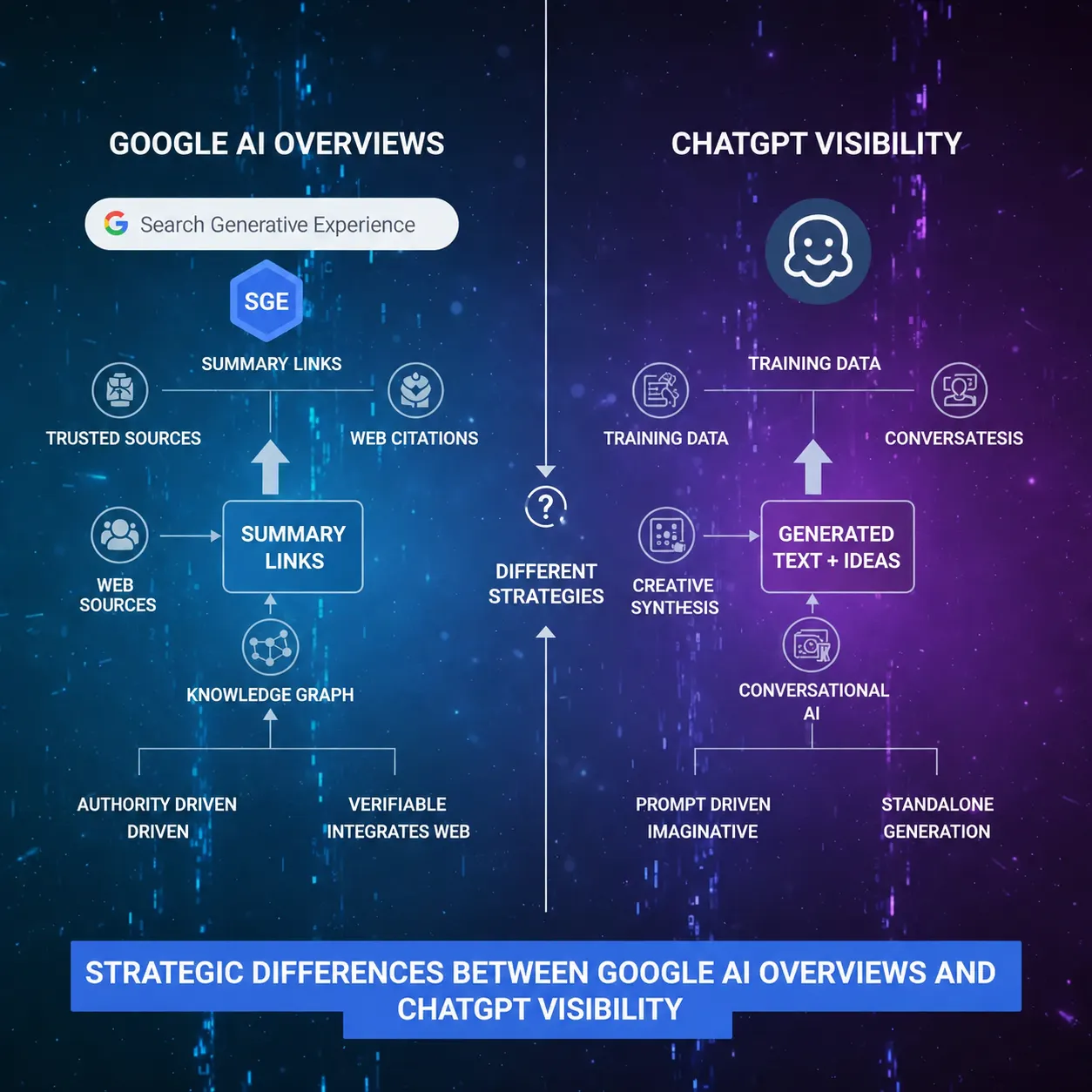
Google AI Overviews leans heavily on your existing SEO performance. If you already rank on page one, you have a strong base.
But ChatGPT operates almost independently of organic rankings. A mid-authority site with well-structured, fact-dense, comprehensively written content can outperform a high-DA site that writes loosely.
| Signal | Google AI Overviews | ChatGPT |
| Organic rank dependency | High | Weak |
| Backlink authority | Standard E-E-A-T signals | The number of backlinks referring to the domain heavily influences the citations |
| Platform preference | Rewards existing top-ranked content | Favors encyclopedic coverage |
You need parallel optimization strategies for each platform.
AI SEO Signals Tell ChatGPT and Google Which Websites to Feature
AI systems read structural cues, parse content hierarchy, and determine if a page answers the query with precision. There are 3 non-negotiable technical foundations:
1. Structured Data And Schema Markup
Structured data is the most manageable technical lever you have for AI visibility. About 65% of pages referenced by Google AI Mode have structured data markup, and about 71% of pages referenced by ChatGPT have some form of structured data markup.
And schema markup refers to metadata written in JSON-LD that tells AI (and search engines) exactly what your content means. It gives AI systems a labeled map of what your content contains.
The most important schema types for GEO are:
- Article: Tells AI the piece is a published editorial resource that has an author, published date, and date modified
- FAQPage: The fastest route to AI citation for question-based queries
- HowTo: Great for procedural content as it helps AI Overviews to bubble up step-by-step formats
- Author: Validates author identity and expertise in the context of E-E-A-T
- Organization: Your brand becomes a recognized name across the web
2. Freshness of Content
AI systems normally like to cite new content. That doesn’t mean you have to keep producing new articles every day. Have a look at some tips to keep your website fresh:
- Ensure that you update the `dateModified` field of your Article schema on each substantive revision
- Change ‘as of 2025’ or other outdated year mentions to the current year on all pages
- Add new statistics, case studies, or developments as sections
- Audit your best-performing pages quarterly and refresh any data points older than 12 months
Did You Know?
Roughly 44% of AI Overview citations came from 2025 content, about 30% from 2024. That means about 84% of citations are from content published within just 2 years!
3. Begin With Answers
For example, AI systems may treat the first paragraph of a page as the primary answer. If your content buries the core answer under 3 paragraphs of context-setting, the AI goes to another competitor page.
So, you must provide a standalone reply in the first 40-60 words. Then, elaborate with depth as points.
Stick to fact-dense after the lead. If possible, add at least one verifiable statistic or data point for every 150-200 words. AI models are looking for specificity and are synthesizing answers for users. Vague content with no source links rarely gets cited.
Off-Site Trust Signals: What AI Looks Beyond Your Website
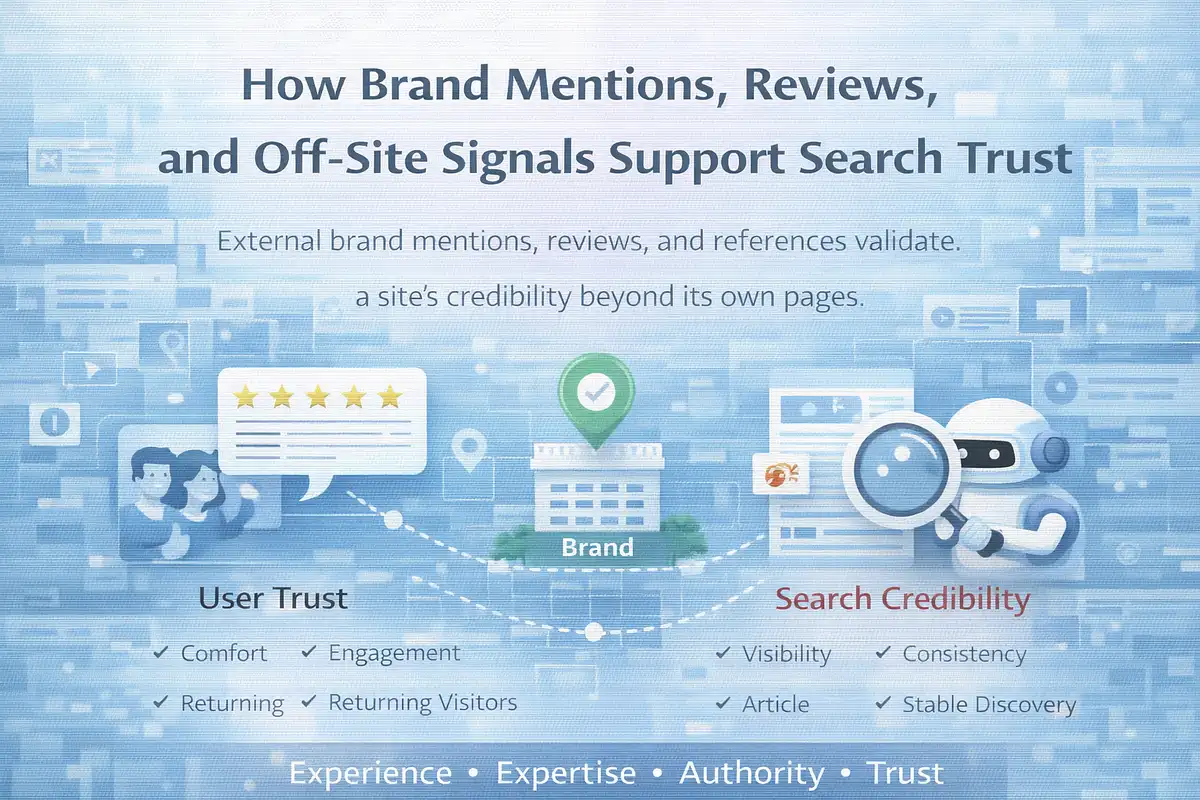
One of the most underrated things about AI SEO is that your website isn’t enough. AI platforms assess your trustworthiness across the entire web, and a number of off-site signals have a quantifiable effect on the likelihood of citation.
• Third Party Review Profiles
Websites with an active profile on Trustpilot, G2, Capterra, or Yelp are more likely to be cited than those that don’t have a presence on any of these sites. These platforms act as trust validators and show that your brand has real customers with public accountability.
It makes sense for B2B and SaaS companies to invest in G2 and Capterra. Google Business Profile and Trustpilot are more important for consumer brands.
• Multi-Platform Brand Visibility
Chatbot recommendations are 2.8× more likely to include sites that are present on four or more platforms. This includes social media, industry directories, industry publications, and community forums such as Reddit.
The logic is simple: If your brand is mentioned multiple times by different independent sources, AI systems will see it as a credible brand
• The YouTube Effect
This one will surprise most SEOs. Among all signals studied, YouTube brand mentions (video titles, transcripts, and descriptions) are the strongest off-site correlating factor for Google AI Overview visibility.
Ignoring video means ignoring one of the highest leverage channels for AI visibility.
• Entity Consistency
Use the same brand name, location information, and category descriptors across all your web properties: your website, social profiles, Google Business Profile, review sites, and press mentions. Inconsistent descriptions lead AI models to be very cautious or not to mention your brand at all.
Content Strategy for AI Citation: Tips To Make Your Website Appear in ChatGPT and Google AI Overviews
Getting the technology right is the foundation. Content strategy is the driver of citation volume. Check out how to write content that gets cited by AI systems:
• Focus on the Most Referenced Content Formats
Comparison articles account for the largest type of AI citations at 32.5%. Opinion pieces are at 10%.
The top formats include ‘how-to’ guides and definitional explainers. That is to say, your editorial calendar should be heavily weighted towards “X vs Y”, “Best X for Y”, “How to do X” and “What is X” structures. General awareness stage blog posts that cover broad topics without specifics don’t get cited.
• Make Every Statistic Matter
The fact-heavy content is ready for citations. Each claim should be specific, attributed, and, if possible, quantified.
• FAQ Optimization
If you are starting GEO from scratch, FAQ optimization is the fastest path to your first citation. First of all, find 10-15 most commonly asked questions about your topic and write thorough answers to those in 2-4 sentences, straight to the point.
At Growth Vive, our team even adds FAQPage schema to each of them and tracks citation performance on a monthly basis by manually querying those questions in ChatGPT, Perplexity, and Gemini for timely improvements.
• Establishing Topic Authority
AI systems consider whether a site is the most complete source on a subject. That means you must try to cover the entire semantic neighborhood of your core topic, including every adjacent cluster of queries, related concepts, and subtopics your audience may be searching for.
For instance, a site that has a single great article on ‘email marketing’ is going to be eclipsed by a site that has articles on email segmentation, list hygiene, deliverability, automation sequences, A/B testing, and subject line optimization, if all are interlinked and updated on a regular basis.
Frequently Asked Questions (FAQs)
Conclusion
Google AI Overviews, ChatGPT don’t browse like users. They compile, cite, and extract.
Isn’t your content structured for extraction? If not, it gets skipped. That’s the new rule.
Looking for a content and SEO strategy that primes your brand for AI citation? At Growth Vive, our team can build the infrastructure that gets your site cited where your audience already asks. Get in touch with us now!