


You may have done everything right. Your content is detailed, it has keywords, backlinks are growing, and the page is even sitting at position #3. Yet, when it comes to Google’s AI Overview, the top pulls snippets from your competitors. Why?
Well, let’s start with a truth: Google’s AI Overviews don’t care about rankings. They are set up to read and cite content that meets their quality checkmarks. If you don’t follow those standards, you won’t get the AI overviews.
So, how do you optimize your website to appear in Google’s AI overviews? Let’s check it out.
What Are Google AI Overviews?
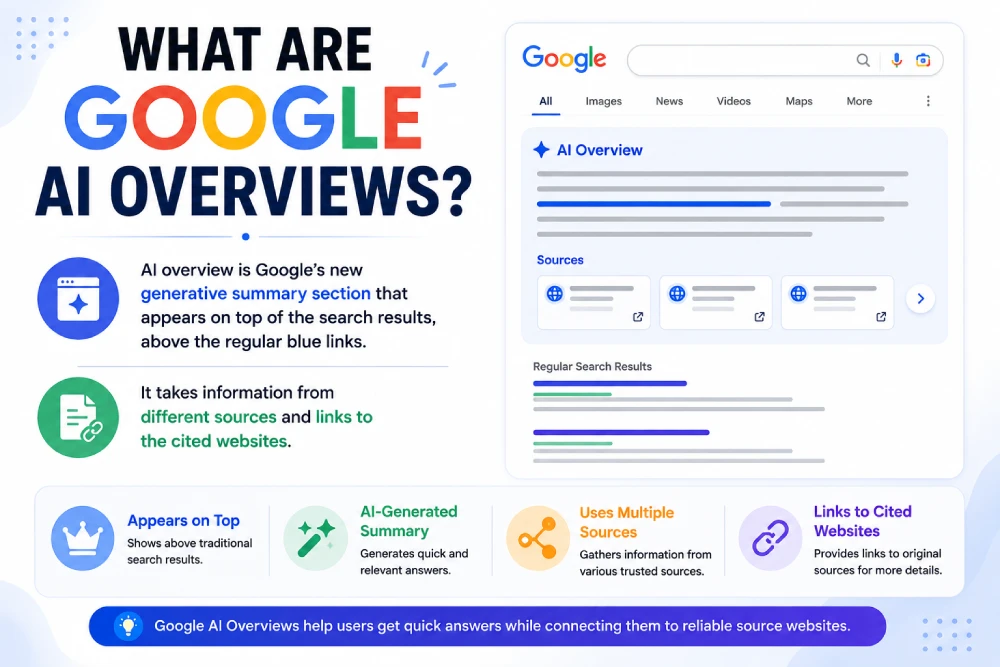
AI overview is Google’s new generative summary section that appears on top of the search results, above the regular blue links. It takes information from different sources and links to the cited websites.
5 Reasons Why Your Website Is Not Appearing on AI Overviews
Despite ranking #1 for a query, why is your website still not cited in the overview? Let’s check it out:
1. Your Content Doesn’t Directly Answer the Core Question of the Query
Google’s AI looks for an answer snippet that exactly matches the query.
If your page begins with three paragraphs of history and a personal anecdote, you are invisible. The AI Overview uses text from pages that provide the answer in the first 40 to 60 words. So ask yourself:
- Does my content answer the question right to the point?
- Is it standalone (not dependent on other paragraphs)?
2. You Lack Entity-Based Topical Authority
Google’s AI is looking at topical authority through entity linking. If your site covers a narrow angle and has no supporting content, the AI will not consider you an authority.
To understand that better, you need to know how AI overviews answer a question. The moment a user inputs a question the system conducts hundreds of related searches lively and presents a curated summary. In short, the AI searches for depth.
That depth comes from content clusters, internal links, and regular topic coverage. You have to prove that you understand the whole domain.
3. Structured Data Missing or Incomplete
Structured data helps to make your content more easily parseable by highlighting which parts the AI should summarize. Pages that use these get included more often in AI Overviews.
You can see it for yourself. Check any AI Overview that shows step-by-step directions. Most of the cited sources use the HowTo or FAQ schema.
If you don’t have a schema on your site, you’re forcing the AI to read messy HTML and infer meaning. It can, but it often moves to pages that make extraction easy.
4. You’re Missing Conversational and Long Tail Query Variations
Voice search and AI interactions are chatty. People do type full questions. These long-tail question phrases should be part of your keyword research.
But how do you find such conversational keywords? Check out the People Also Ask section. Then, you can look at the queries that are already getting AI Overviews in your niche. Pull the actual verbiage and use those full questions as H2s or H3s on your page, or perhaps even create a dedicated blog for each, if needed.
5. Your Content Isn’t Cited by Other High-Authority Sources
AI models assess trust through corroboration. If multiple authoritative sources cite the same stat or method, the AI considers it a fact.
So, you need external signals of trust from:
- Mentions in high DA .gov, .edu, and respected industry sites
- Publish original research that others will reference
How to Fix And Optimize Your Website for Google AI Overviews?
Have a look at some practical AEO tips we use at Growth Vive to capture the AI overview spot:
1. Optimize for the Answer
Give the AI what it wants and do it fast. If possible, deliver it immediately below your title and keep it under 60 words.
Then, you can expand into lists, tables, numbered lists, and so on. The AI loves bite-sized chunks.
2. Create Topic Clusters That Shout Authority
Build a pillar page around a core topic and interlink it with related articles on subtopics. And update the cluster regularly with new:
- Data
- Quotes
- Links to fresh content
When the AI sees your library of interrelated content, it knows you are a serious authority. This entity strength propels you beyond single-page competitors.
3. Add The Proper Schema Markup Today
Open your CMS and add these schemas to all core pages:
- HowTo
- Article
- Author
- Date
In case your page has FAQs (it’s recommended to add them), add FAQ schema also. Similarly, add Use HowTo schema for step by step instructions.
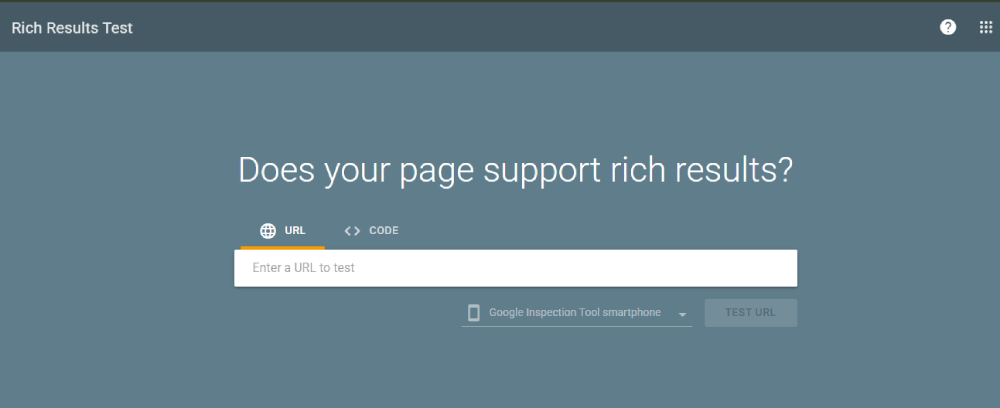
You can test them out with Google’s Rich Results tool to make sure it’s all valid. Have a look at how to do it:
- Enter your page URL or paste the code snippet
- Click Test URL
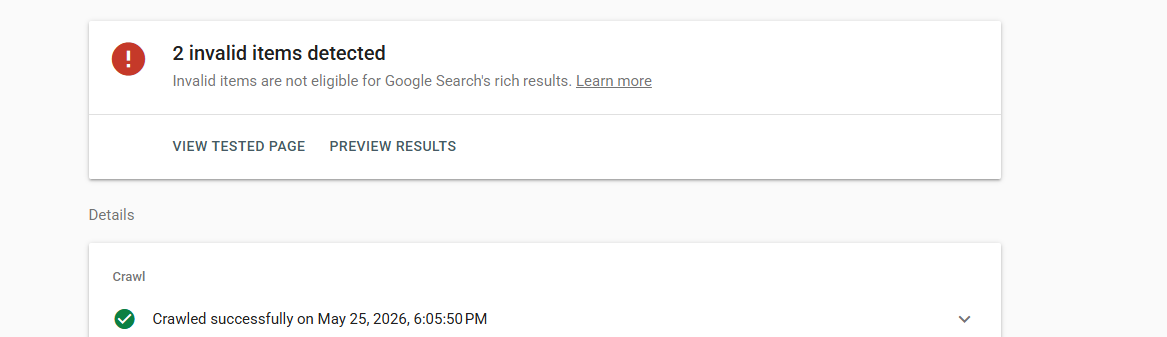 The tool scans your page and shows the schemas. Green checks mean valid markup. Errors appear in red with specific fix tips.
4. Optimize With Exact Phrases
Go to Google, search for your topic, and write down every question that comes up in the “People Also Ask” section. Then check the sources cited by existing AI Overviews for that query and note:
- What phrases are used on those pages?
- What is their Q & A format?
Make dedicated H2s that match those queries verbatim. Then provide a crisp answer under each one. This way, your page is in the exact language the AI has already shown it prefers.
5. Get Citations Not Just Links
Backlinking is still important. You just need to change the way you do it. Here’s how to do it right in 2026:
- Get mentions of your brand on trusted platforms (quality over quantity)
- Make use of HARO to receive expert quotes for your story
- Publish an original survey or industry statistic every month. Other sites will naturally cite your work, and the AI sees a vetted source.
How To Track AI Overview Performance?
The best way to track AI overview performance is to do a manual search of your target queries in an incognito window. You can monitor which of your pages are cited and for what queries. Track changes after you apply the fixes above.
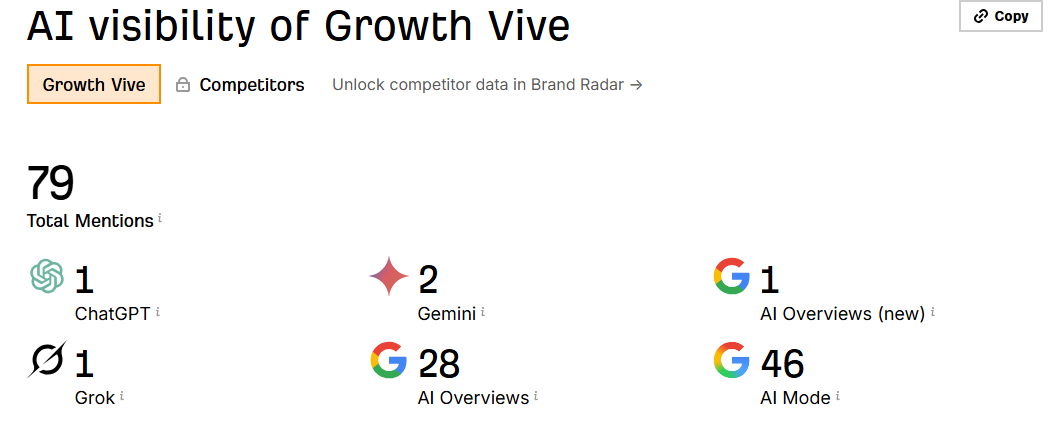
And if you want to track your brand mentions (rather than a topic), use a tool like Ahrefs Free AI Visibility Checker.
Frequently Asked Questions (FAQs)
1. How does AI select content for an overview?
The AI prefers pages that give a perfect standalone answer and websites that cover an entire subject with interlinks to many related blogs.
2. Can new websites show up in Google’s AI Overviews?
Indeed, it’s possible. Even new websites with barely any links get cited because they answered a specific question perfectly and wrapped it in the right schema.
3. How do I actually check if Google’s AI is using my page or not?
Open a private window, search your target query, and look at the top AI box. Click the little link icons. Those are the cited sources. If your website is listed there, you’re cited.
4. Why did my website disappear from Google’s AI overview?
Google runs constant tests and swaps sources even if your page is fine. Just keep your content clean and updated. You will get cited back soon.
5. Why am I still not showing up in Google’s AI overview?
You can, but the AI never ranks clones. It looks for original angles with fresh data. If you just rewrite without adding a unique angle, you will get ignored.
Conclusion
Invisibility in AI Overviews is a clear indication you need sharper answers, stronger authority signals, and better structure in your content.
Looking for expert help? Growth Vive is an expert in getting brands seen in AI Overviews. Let’s get your content cited where it matters the most.