


Many business owners are told that domain extensions don’t matter for SEO. That’s only partly true. Even though Google doesn’t rank a site higher just because it uses .com or .ca, it does use domain extensions to understand geographic intent, audience relevance, and search behavior. And those signals definitely influence visibility.
So, which domain helps you rank for the right audience with less effort? Well, a .com domain gives you global flexibility, whereas a .ca domain sends a strong Canada-focused signal. The SEO impact depends on what you’re trying to achieve.
In this blog, we will break down the real SEO differences between .com and .ca so that you can pick the domain that actually supports your growth strategy.
Did You Know?
The .ca domain was started in 1987 by John Demco at the University of British Columbia and managed voluntarily for over a decade! Today, it’s one of the most secure and trusted TLDs in the world.
What Domain Extensions Really Mean to Search Engines
To a search engine, your domain extension acts as a primary routing signal. It tells the algorithm who you are and, more importantly, where you belong:
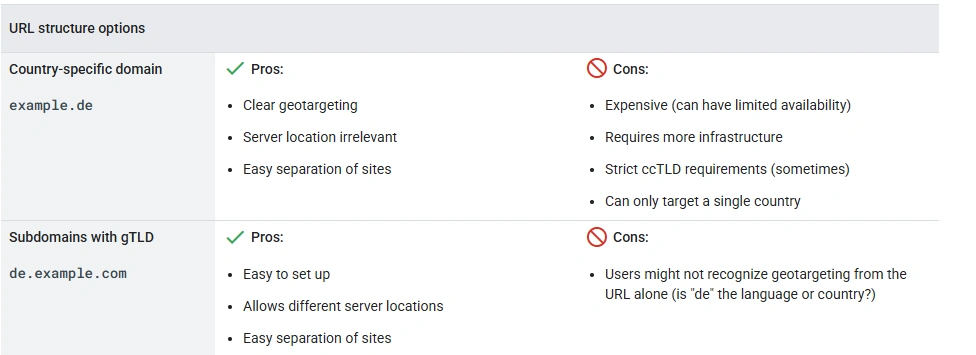
- gTLDs (Generic Top-Level Domains): Extensions like .com, .net, and .org are region-blind. Google treats these as globally neutral. They don’t give you a boost in Toronto, but they don’t penalize you in London either.
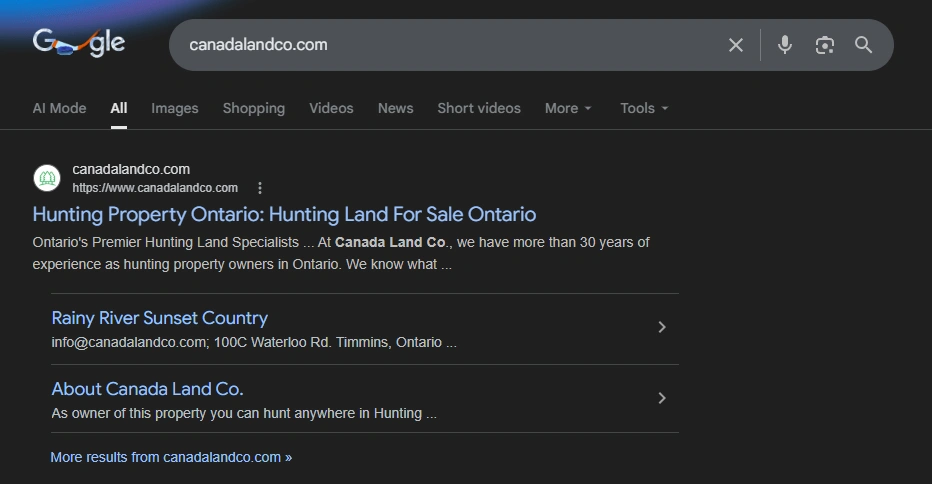
- ccTLDs (Country Code Top-Level Domains): Extensions like .ca (Canada), .uk (United Kingdom), or .de (Germany) are the single strongest way to show search engines that your content is targeted to a specific country.
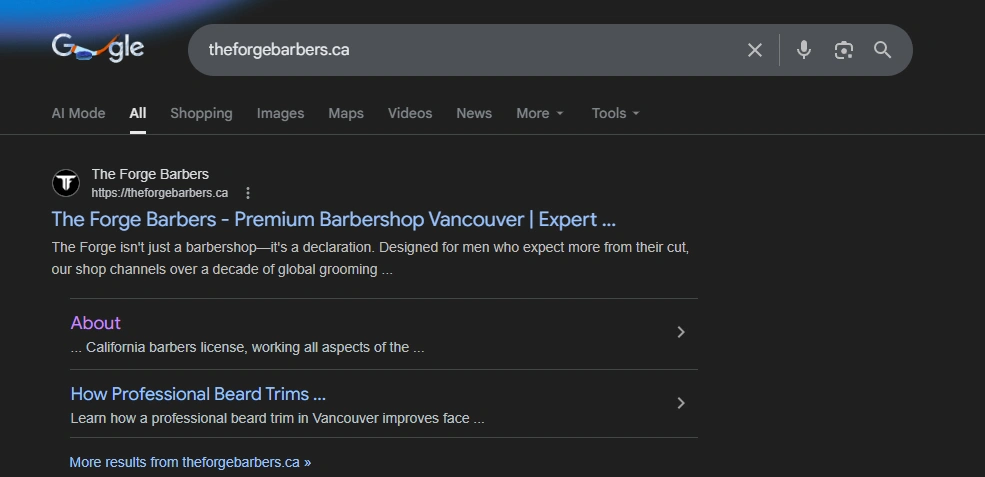
.com vs .ca: Core SEO Differences That Actually Matter
Which domain makes it easier for Google to show your site to the right users? Let’s check it out:
1. Psychology of the Click (CTR Factor)
Ranking is just the tip of the iceberg. What matters even more is the clicks. And localized domains like .ca score over there.
When a Canadian searcher sees a .ca, they expect CAD pricing and no surprise border duties. This leads to a higher Click-Through Rate (CTR). Data from CIRA (Canadian Internet Registration Authority) shows that 86% of Canadians have made an online purchase in the last year, and a staggering 64% prefer Canadian retail sites when given a choice.
Since Google uses engagement metrics to validate rankings, these local clicks actually help keep you at the top.
2. Cost and Availability
There are over 160 million .com domains registered. Finding a short, catchy .com for your brand is like finding a parking spot in downtown Toronto on a Saturday night. Simply saying, it’s expensive or even impossible.
.ca domains will have significantly lower registrations. You are much more likely to get your exact business name without adding awkward hyphens or extra words.
3. Link Building Difficulty
Backlinks are the currency of SEO. The ease of building backlinks depends on your domain extension:
- Local Backlinks: It is significantly easier to get a backlink from a Canadian news site, a .edu.ca university, or a local board of trade if you have a .ca domain. These local links carry immense weight for local rankings.
- Global Outreach: A .com is a universal passport, mainly for gTLDs like .com. If you’re reaching out to a US-based blog for a guest post, they might view a .ca as irrelevant to their audience.
Did You Know?
Google values link relevance more than link quantity. A single backlink from a trusted Canadian news site to a .ca domain can outweigh multiple generic international links when ranking for Canada-specific keywords.
At Growth Vive, we can help you receive high-quality backlinks, whether it’s local or international, with advanced outreach strategies.
4. Expansion Strategies
This is where .com domains get a clear edge.
- Border Wall: A .ca domain has what SEOs call a ‘geofence’. It is extremely difficult to rank a .ca site in the US or UK because Google assumes the content is only for Canadians.
- Scalability: If you plan to sell globally (at least in the future), a .com can easily penetrate the rankings of any country. You don’t need to change the domains. This lowers risk to a great extent.
5. Compliance Requirements
Unlike .com, which is a free-for-all, .ca comes with a big catch: Canadian presence requirement. You must prove you are a Canadian citizen, permanent resident, or a corporation registered in Canada to own a .ca.
But that comes with a bonus point. This strict compliance requirement makes .ca one of the safest domain extensions in the world. According to Spamhaus, .ca has a badness score as low as 0.0098.
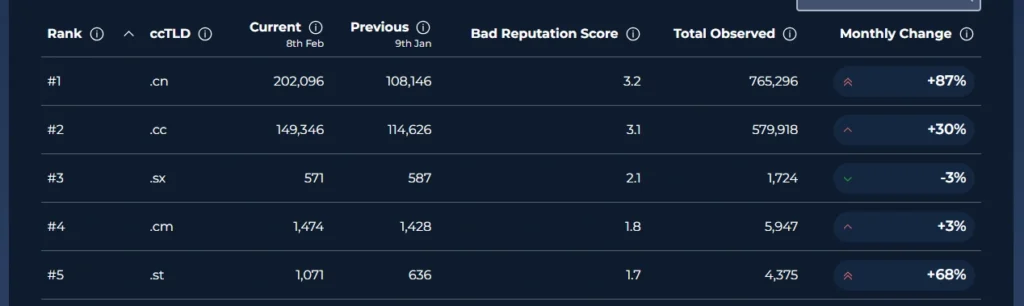
Domains With The Least Reputation
.com vs .ca: Which is The Best?
Choose the domain that aligns with where your customers are today and where your business will be tomorrow.
| Feature | .ca (Country Code) | .com (Generic Code) |
| Primary Goal | Dominating the Canadian market | Global brand recognition |
| SEO Signal | High local relevance | Global |
| Trust Factor | High trust among Canadians | Average trust across the world |
| Availability | Easier to find your name | Most good names are already taken |
| Expansion | Little scope for expansion as the domain extension is limited to Canada | No limits as .com is global |
Frequently Asked Questions (FAQs)
1. Is .ca better than .com for SEO in Canada?
Yes, for Canada-focused searches, .ca has a natural advantage due to geographic targeting and user trust.
2. Can a .com rank in Canada as well as a .ca?
Yes, but you have to work harder. You’ll need more local backlinks and must ensure your Google Business Profile is perfectly optimized to prove your location to Google.
3. Does Google prefer .com domains?
No. Google has officially stated it does not favor any domain extension. Relevance and intent matter more.
4. Should I buy both .com and .ca?
If the budget allows, yes. Many brands use one as the main site and redirect the other for protection from impersonating the brand.
5. Does moving from .com to .ca hurt SEO?
It causes a temporary dip. If done with proper 301 redirects and an updated Search Console profile, your local rankings will usually recover and often surpass where they were on the .com.
Conclusion
Your domain extension is a business strategy. If you want to be the ‘go-to’ choice for Canadians, go for a .ca domain. But if you envision a future where your company dominates all international markets, it’s better to start with a .com domain itself.
The right choice depends on where you want to stand three years from now. However, picking the domain is only the first step. You still need to make sure people can actually find it.
That’s exactly where Growth Vive SEO agency comes in. We build the technical authority and localized content strategies to bring in measurable results, whether you’re targeting the Greater Toronto Area or the global market. Book a free audit with Growth Vive today!